- 11 June 2026
- Culture, villages and heritage
Flora and fauna of Ibiza: endemic species and local nature

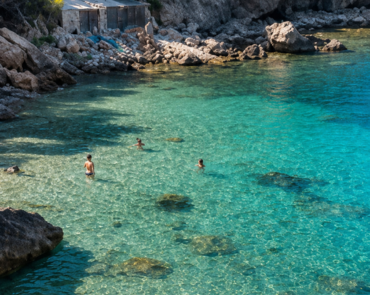
Ibiza’s most natural side: biodiversity, landscapes and unique species to discover the island from a different perspective
Ibiza is often described through its beaches, sunsets and Mediterranean atmosphere, but the island has another, much quieter reading: its nature. In its salt flats, pine forests, cliffs, islets, seabeds and rural paths live species that form part of the deepest identity of the Pityusic Islands.
Talking about Ibiza’s endemic flora and fauna means talking about unique lizards, migratory birds, plants adapted to wind and salt, Phoenician junipers, pine forests, discreet flowers and, above all, Posidonia seagrass. This guide is designed for travellers who want to observe the island more carefully, know what they may find and understand how to enjoy nature without disturbing it. If you also want to discover the island through landscapes, paths and less obvious areas, you can complete the experience with our guide to routes around Ibiza.
From Hostal Rosell Boutique, in the centre of San Antonio, you can organise this more natural side of Ibiza in a comfortable and flexible way: routes along the west coast, excursions to coves, trips to the north, visits to Ses Salines or escapes to Formentera. Our accommodation is a practical base for those who want to discover the island at a relaxed pace, return to a central area with services and enjoy a welcoming, peaceful and well-connected stay.
Quick index
Why Ibiza’s nature is so special
Ibiza is a small island, but a very diverse one. In just a few kilometres, the landscape changes: salt flats, rocky coves, sandy beaches, dunes, cliffs, farmland, pine forests and coastal areas with transparent waters. This variety creates refuges for land species, birds, reptiles, Mediterranean plants and marine life.
One of Ibiza’s great natural assets is linked to Posidonia oceanica, a Mediterranean marine plant that is essential for water quality, beach stability and marine biodiversity. UNESCO highlights the Posidonia meadows in the “Ibiza, Biodiversity and Culture” area as a key element of the island’s natural value.
For travellers, this changes the way they look at Ibiza. It is not just about arriving at a beautiful cove, taking a photo and moving on. Very often, the island’s beauty lies in understanding why the water is so clear, why there are birds in the salt flats, why certain plants grow close to the rocks or why a small lizard can be so important to the balance of the ecosystem.
If you are planning a more complete trip, you can combine this guide with our guide to what to see and do in Ibiza, where we bring together plans, routes, beaches, villages and experiences to help you discover the island with more context.
Unique species of Ibiza
The Pityusic lizard: the island’s discreet symbol
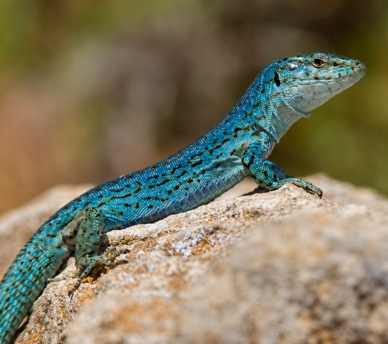
The Pityusic lizard, whose scientific name is Podarcis pityusensis, is one of the most representative species of Ibiza and Formentera. It can be seen on walls, rocky areas, paths, gardens and some natural spaces, especially when it is sunny and quiet.
What is interesting is not just seeing it, but understanding its value. Ibiza Travel describes it as an endemic species of these islands, with different subspecies on the islets. In other words: we are not talking about just any lizard, but about a presence closely linked to the natural history of the Pityusic Islands.
The best way to observe it is simple: walk slowly, do not try to touch it, do not chase it and do not feed it. If it appears near a wall or a path, just stop for a few seconds and let it continue at its own pace.
Endemic species: small creatures that tell a big story
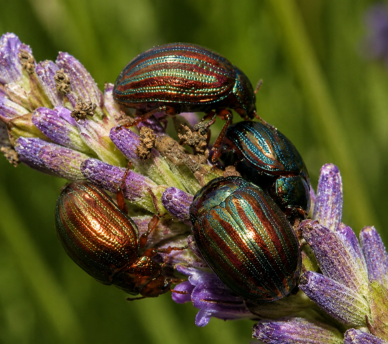
On an island, isolation encourages some species to evolve in their own way. That is why Ibiza and the nearby islets have special value for biodiversity. In addition to the Pityusic lizard, there are snails, beetles and other small endemic species that are less visible to travellers, but important within the natural balance.
Most visitors do not travel to Ibiza to identify insects or small invertebrates, and there is no need to do so. But it is worth understanding one thing: island nature is fragile. What may seem like a minor change in a continental territory can have a much greater impact on the balance of an island.
That is why every gesture matters: respect the trails, do not lift stones out of curiosity, do not take plants, do not feed animals and avoid entering restricted areas.
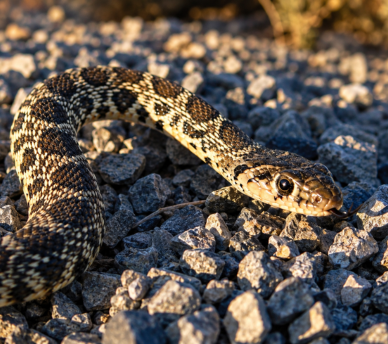
Invasive snakes: a threat worth understanding
One of the most delicate issues in Ibiza’s current biodiversity is the presence of invasive snakes, especially the horseshoe whip snake (Hemorrhois hippocrepis). Scientific studies have pointed out that this species arrived accidentally in Ibiza at the beginning of the 21st century, associated with the importation of ornamental olive trees, and that it poses a threat to the Pityusic lizard.
IbizaPreservation also works on conservation initiatives to protect the Pityusic lizard from this threat, with projects involving refuges, selective trapping and local collaboration.
For travellers, the message should be cautious and responsible: if you see a snake, do not handle it or try to intervene on your own. The right thing to do is to keep your distance and notify the appropriate local channels if you are on a private property, in an accommodation or in a managed natural area.
Wildlife in Ibiza: flamingos, shearwaters, cormorants and Mediterranean wildlife
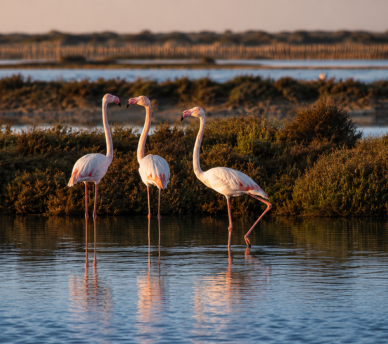
Flamingos and birds in Ses Salines
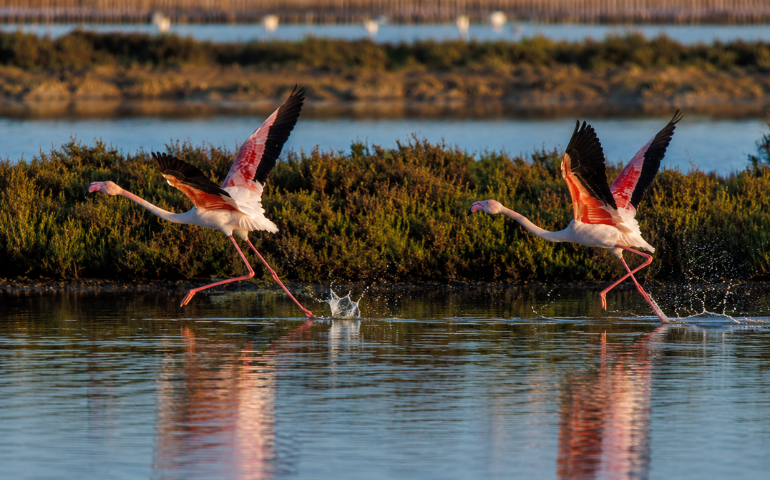
The Ses Salines Natural Park of Ibiza and Formentera is one of the best places to understand the connection between landscape, salt, water and birds. According to Ibiza Travel, more than two hundred bird species have been recorded in the park, with a notable presence of flamingos, black-winged stilts, common shelducks, plovers, Audouin’s gulls and Balearic shearwaters.
Flamingos are probably the most striking. At certain times of the year, they can be seen in the salt ponds, always from a distance and respecting restricted areas. Sant Josep highlights that, between late summer and autumn, many flamingos arrive at the park to spend the winter or stop during their migration.
Birdwatching does not require extensive knowledge. It is enough to be patient, avoid noise, keep a respectful distance and remember that a good photo never justifies disturbing an animal. In fact, the Balearic Government has stressed the importance of not entering restricted areas to avoid disturbing the birds.
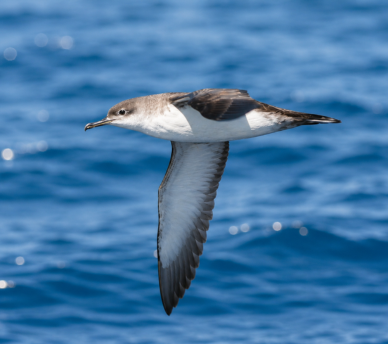
The virot or Balearic shearwater: a seabird closely linked to the Pityusic Islands
The virot, the popular name for the Balearic shearwater in the Pityusic Islands, is one of the most special seabirds associated with Ibiza and Formentera. SEO/BirdLife describes the Balearic shearwater (Puffinus mauretanicus) as Spain’s only endemic seabird and a highly threatened species, which breeds in the Balearic Islands and makes long-distance movements outside the archipelago.
It is not a bird to seek out from very close range or to turn into a tourist attraction. Its value lies precisely in understanding that the islets, cliffs and waters between Ibiza and Formentera are delicate spaces for many seabirds. From the coast, on boat crossings or in open areas in southern Ibiza and Formentera, you can sense this wilder dimension of the Pityusic Sea, always without disturbing colonies or approaching sensitive areas.
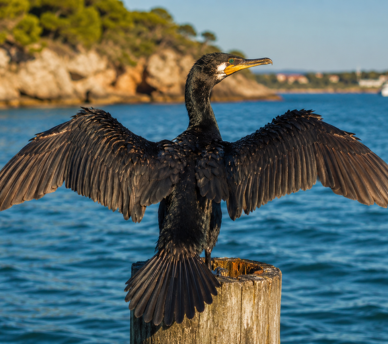
The European shag: the dark silhouette of the rocky coast
The European shag is another seabird that fits very well into this natural reading of Ibiza. SEO/BirdLife defines it as an essentially marine and coastal bird, closely linked to stretches of rocky coastline, where it often perches, moves close to the shore and feeds mainly on fish.
For travellers, its presence can go unnoticed if they do not look carefully. Sometimes it can be seen as a dark silhouette on a rock, near cliffs or less urbanised coastal areas. The important thing is to observe it without getting too close, especially when sailing near islets, cliffs or areas where seabirds may be resting or breeding.
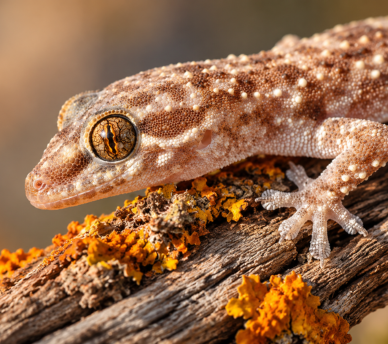
Geckos and small Mediterranean wildlife
As evening falls, geckos may appear on walls, façades and quiet corners. They are part of that discreet wildlife that often goes unnoticed, but helps give the island its Mediterranean character.
It is also common to find small birds, butterflies, insects, beetles, snails and wildlife associated with pine forests, fields and rocky areas. They are not always endemic species or easy to identify, but they are part of Ibiza’s natural experience.
The key is to observe without interfering. Ibiza’s nature is best enjoyed when we do not try to control it: walk, listen, look and let the environment continue functioning without our presence taking centre stage.
IBIZA’S FLORA: PLANTS, FLOWERS AND LANDSCAPES THAT EXPLAIN THE ISLAND
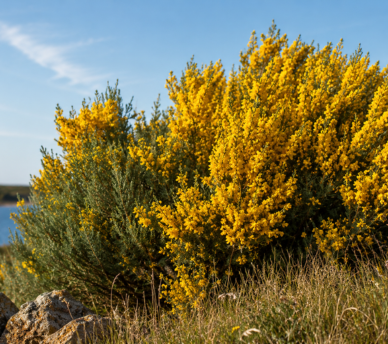
Genista dorycnifolia: an endemic species of Ibiza
Among the most interesting plants for understanding Ibiza’s uniqueness is Genista dorycnifolia. The Herbari Virtual del Mediterrani Occidental describes it as an endemic species exclusive to the island of Ibiza, found in garrigue and Mediterranean scrubland areas, especially in the northwest.
It is not a plant that the average traveller will easily identify without a botanical guide, but it represents the discreet richness of Ibiza’s flora very well. Very often, what is special is not a spectacular flower, but a plant that has adapted over generations to a very specific landscape.
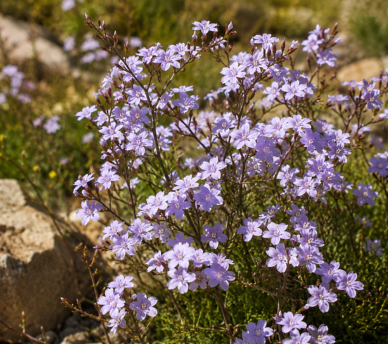
Limonium ebusitanum and coastal vegetation
In rocky coastal areas, plants appear that are able to live with wind, salinity and very little soil. Among them, Limonium ebusitanum is one of the species linked to Ibiza and Formentera. The Herbari Virtual places it on rocky coasts and within the Mediterranean Balearic distribution.
This type of flora explains why we should not leave the paths in sensitive areas. A coastal plant may seem small or resilient, but growing in these environments requires very precise adaptation. Stepping on it, pulling it out or using it as a “detail” for a photo damages more than it may seem.
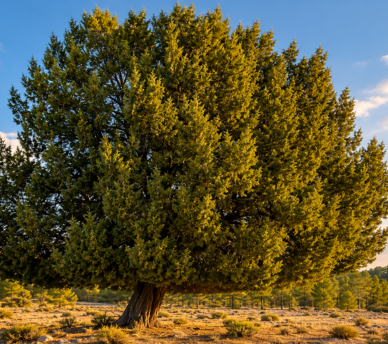
Estepa joana, Phoenician junipers and Mediterranean pine forests
Estepa joana (Hypericum balearicum) is another example of Balearic flora found in Ibiza. The Govern de les Illes Balears describes it as an endemic plant of the Balearic Islands, with yellow flowers and a presence in mountain garrigue, although on some islands it appears only occasionally.
Alongside these more specific species, Ibiza’s plant landscape is shaped by Mediterranean pine forests, Phoenician junipers, scrubland, coastal vegetation, dunes and plants adapted to poor soils and dry environments. In Ses Salines, for example, there are Mediterranean pine forests, coastal juniper woodlands, halophytic vegetation, dunes and cliffs.
You do not need to be a specialist to enjoy this side of the island. It is enough to follow a walking route, drive through less urban areas or stop at a rocky cove and observe how the vegetation changes as it gets closer to the sea.
If you are interested in discovering this more scenic side of Ibiza, you can find more ideas in our guide to unique landscapes to explore by car in Ibiza, where we bring together suggestions for discovering the island at a relaxed pace and enjoying some of its most special scenery.
Posidonia: the invisible treasure beneath the water
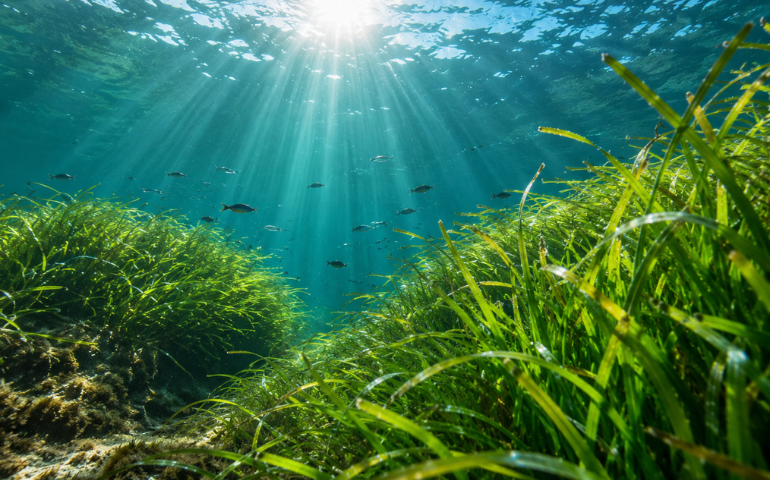
Posidonia oceanica is not an algae. It is a marine plant with roots, stems and leaves, and one of the great natural treasures of the Mediterranean. In Ibiza and Formentera, it plays an essential role: it helps keep the water clear, protects the coastline and creates shelter for numerous marine species.
UNESCO highlights that Ibiza’s Posidonia seagrass meadows are fundamental to the ecological processes between marine and coastal ecosystems, as well as serving as a habitat for marine biodiversity.
For travellers, Posidonia can be noticed in several ways. Sometimes it appears as dark areas beneath the water when snorkelling. At other times, it can be seen on the shore as accumulated plant remains. Although they may look like “dirt”, these remains are part of the beach’s natural dynamics and help protect it.
If you go snorkelling, avoid touching the seabed, do not drag your fins over the plant and do not pull anything out. If you go by boat, it is essential not to anchor on Posidonia. The Balearic Posidonia Decree prohibits, among other practices, uncontrolled anchoring on Posidonia meadows.
Ibiza’s marine life: fish, rocky seabeds and Mediterranean species
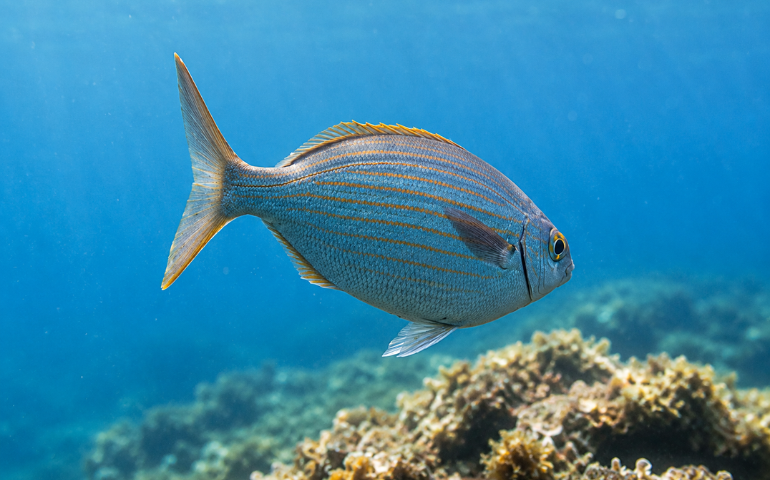
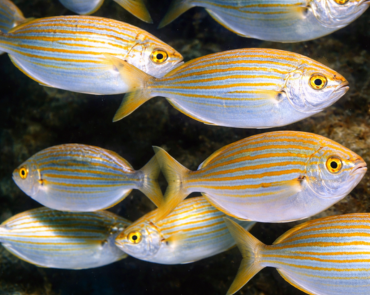
In addition to Posidonia, Ibiza’s sea is home to a wide variety of marine life typical of the Mediterranean. In areas with clear waters, rocky seabeds and underwater meadows, it is possible to observe small fish, schools of salema, ornate wrasse, white seabream, saddled seabream, sea urchins, starfish and other species that form part of the island’s marine balance. You do not always need to go far from the coast: many coves allow you to discover this underwater world simply by snorkelling calmly and respecting the seabed.
To better understand which marine animals you may find, which beaches are best for observing them and how to enjoy snorkelling without damaging the environment, you can consult our guide to the best beaches for snorkelling in Ibiza, where we explain the island’s marine fauna and most interesting seabeds in more detail.
Where to see nature in Ibiza
Ses Salines: birds, salt flats, dunes and Posidonia
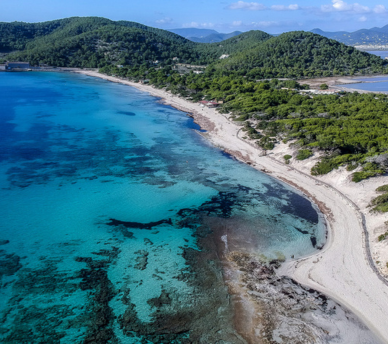
Ses Salines is one of Ibiza’s great natural areas. It combines salt ponds, birds, dunes, beaches, coastal vegetation, historic landscapes and highly valuable seabeds. It is a highly recommended visit if you want to understand the relationship between nature and culture on the island.
Here, it is best to take your time. Rather than trying to “see everything”, the plan is to walk, observe birds from a distance, respect the marked areas and understand that the salt landscape is also part of Ibiza’s history.
South of Ibiza, Es Freus and islets: seabirds and open horizons
The marine area between southern Ibiza and Formentera, with Es Freus and several islets, is especially important for seabirds. SEO/BirdLife identifies the waters around Formentera and southern Ibiza as important for species such as the Balearic shearwater, European storm petrel, Audouin’s gull and European shag.
For travellers, this part of the island is best enjoyed with a calm perspective: observing from the coast, from a boat with responsible behaviour or during the journey to Formentera. It is not about getting close to islets or looking for nests, but about understanding that the open sea is also part of Ibiza’s natural heritage.
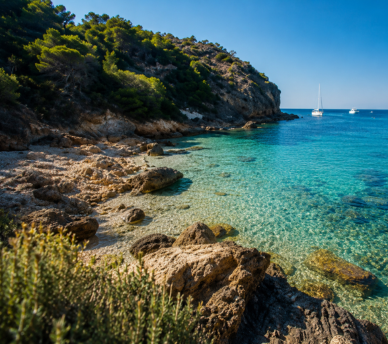
Rocky coves and the west coast
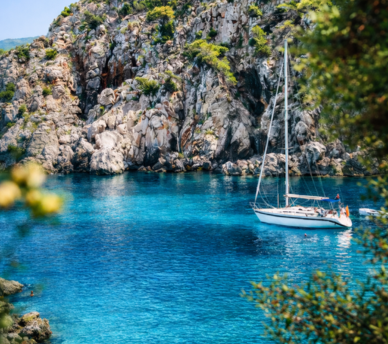
Rocky coves and some stretches of the west coast allow you to observe a more mineral side of Ibiza: cliffs, wind-resistant vegetation, transparent waters, small fish, seabeds and sunsets. They are not always the most comfortable places to spend the whole day, but they are among the most interesting for those looking for scenery.
In these areas, it is important to wear suitable footwear if the access is uneven, avoid walking off marked paths and be careful not to step on coastal vegetation. If you are looking to combine nature and calm, our selection of quiet beaches in Ibiza may also help you.
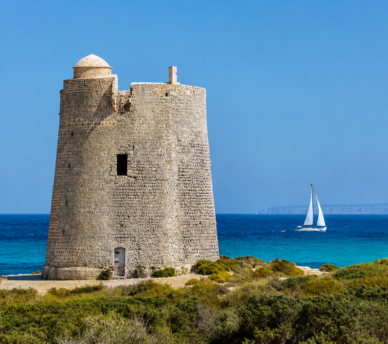
Northern Ibiza: pine forests, paths and rural landscapes
Northern Ibiza offers a greener and calmer reading of the island. Pine forests, rural paths, gentle slopes, less urbanised coastal areas and open landscapes allow you to discover an Ibiza that feels very different from the more touristy areas.
It is a good option for anyone who wants to walk, follow gentle routes, stop at viewpoints or simply drive at a relaxed pace. To better prepare this kind of outing, you can consult our guide to hiking in Ibiza, with routes organised by area and difficulty level.
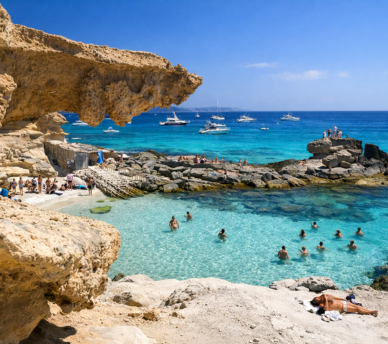
Formentera: delicate nature and transparent waters
Formentera shares part of the natural identity of the Pityusic Islands with Ibiza, but with a character of its own: open beaches, dune systems, very clear waters, quiet paths and a very close relationship with Posidonia.
If you are going to spend a day there, it is worth organising it with respect: do not leave the walkways in dune areas, do not leave any waste, avoid anchoring on Posidonia and choose your timing carefully so that the whole visit is not concentrated in the same hours and places. You can expand your planning with our guide to what to do in Formentera.
How to see Ibiza’s flora and fauna without harming them
The best way to enjoy Ibiza’s nature is simple: observe more and interfere less. You do not need to touch a lizard, pick a flower, feed animals or leave a path to have a more authentic experience. Quite the opposite: the less we alter the environment, the more likely we are to truly see it.
There are a few basic rules worth remembering. Do not pick flowers or plants, even if they seem abundant. Do not step on dunes or coastal vegetation. Do not lift stones to look for animals. Do not feed birds, lizards or cats in natural areas. Do not leave any waste behind. Avoid making unnecessary noise in birdwatching areas. And if you go snorkelling, avoid placing your feet or fins on the seabed.
At sea, the most important rule is to respect Posidonia. If you are travelling by boat, make sure you anchor only in permitted areas and never over seagrass meadows. If you observe seabirds such as Balearic shearwaters, shags or gulls, keep your distance, avoid approaching islets or breeding cliffs, and do not turn a photo into a disturbance for wildlife.
This kind of responsible tourism does not take freedom away from the trip. Quite the opposite: it helps Ibiza remain Ibiza.


